How to Turn a Menu Into a Visual Experience Without Overcomplicating It
When you’re creating a menu, you need to remember that a truly memorable meal experience starts long before the first plate reaches the table.
Whether you’re planning a standout supper at a private home, a wedding banquet, much-needed refreshment at a bachelor’s or bachelorette party, or a birthday party feast, the menu is part of how your guests will receive the event as a whole.
Well-designed menus set the tone for your event, define your diners’ expectations, and guide them through their culinary journey. But you need to strike a balance between embellishment and facts. Too much decoration, imagery, or information becomes overwhelming, but you also don’t want people to be left wondering what to expect.
Rest assured, turning your menu into a visual experience isn’t too complicated, and you don't need to be a graphic designer or Photoshop fundi to do so. A few deliberate choices can guide people through the meal while reinforcing the atmosphere you want to create.
Let the Culinary Chronicles Begin
Your menu will tell a story, and its design could reflect the food’s history, its country of origin, or the kinds of people who generally seek it out as a point of interest.
If you’re catering for a rustic, seasonal reception that evokes home-cooked fare, consider a menu in natural colors such as sage green, terracotta, rust, and charcoal. If the feeling you’re trying to evoke is more elegant and refined, and you’re bringing the restaurant experience to a different setting, shades of ivory, black, and gold set a more sophisticated tone.
Consistency matters too, so stick to a limited color palette of around three hues and pick one or two complementary fonts like sans-serif headings paired with serif body text. Then, use the same tone and style throughout, and arrange the content in a clear, logical order that makes the menu easy to follow by grouping dishes and presenting them in a logical sequence.
Dish Out a Menu That Flows
It’s rare for someone to read a menu from the top left to the bottom right. Most of us scan categories, look for signature dishes, and are drawn to items that capture our attention because they’re different in some way.
When you’re creating a menu, you need to remember that a truly memorable meal experience starts long before the first plate reaches the table.
Whether you’re planning a standout supper at a private home, a wedding banquet, much-needed refreshment at a bachelor’s or bachelorette party, or a birthday party feast, the menu is part of how your guests will receive the event as a whole.
Well-designed menus set the tone for your event, define your diners’ expectations, and guide them through their culinary journey. But you need to strike a balance between embellishment and facts. Too much decoration, imagery, or information becomes overwhelming, but you also don’t want people to be left wondering what to expect.
Rest assured, turning your menu into a visual experience isn’t too complicated, and you don't need to be a graphic designer or Photoshop fundi to do so. A few deliberate choices can guide people through the meal while reinforcing the atmosphere you want to create.
Let the Culinary Chronicles Begin
Your menu will tell a story, and its design could reflect the food’s history, its country of origin, or the kinds of people who generally seek it out as a point of interest.
If you’re catering for a rustic, seasonal reception that evokes home-cooked fare, consider a menu in natural colors such as sage green, terracotta, rust, and charcoal. If the feeling you’re trying to evoke is more elegant and refined, and you’re bringing the restaurant experience to a different setting, shades of ivory, black, and gold set a more sophisticated tone.
Consistency matters too, so stick to a limited color palette of around three hues and pick one or two complementary fonts like sans-serif headings paired with serif body text. Then, use the same tone and style throughout, and arrange the content in a clear, logical order that makes the menu easy to follow by grouping dishes and presenting them in a logical sequence.
Dish Out a Menu That Flows
It’s rare for someone to read a menu from the top left to the bottom right. Most of us scan categories, look for signature dishes, and are drawn to items that capture our attention because they’re different in some way.
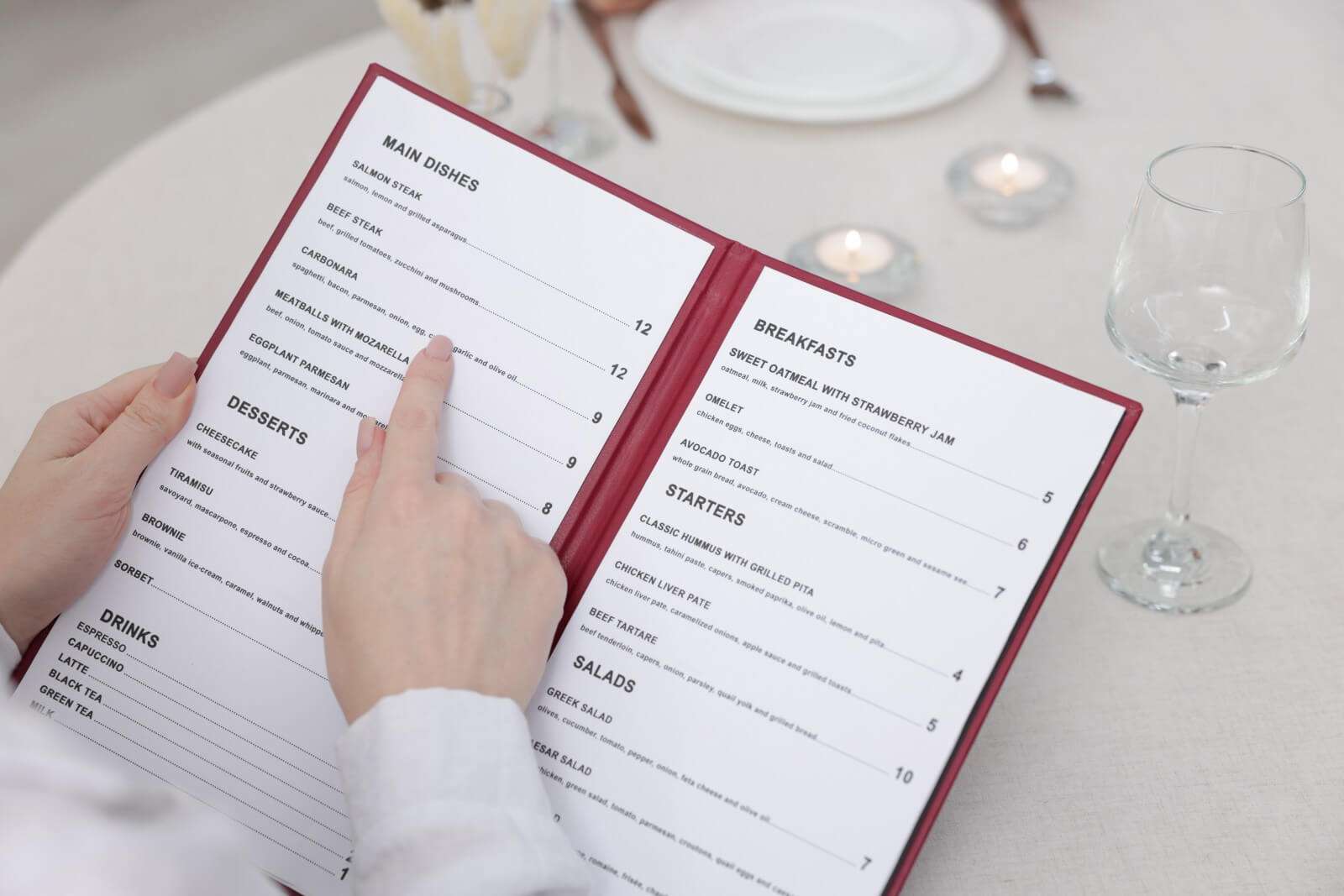
Organize your menu layout so that this process is easy and enjoyable by dividing it into clear sections that help your diners navigate without overwhelming them with too much information.
Appetizers, main courses, desserts, and beverages should be clearly listed, and the spacing between sections should create a sense of purposeful structure that gently gives your guests room to find exactly what they’re looking for.
White space is also your friend in the body of your menu’s list of dishes and descriptions, so don’t overcrowd it. Leave open areas around some of the text so your best selections stand out naturally.
While it may be tempting to fill every corner with decorative elements and graphics, a cleaner, simpler layout generally creates a stronger visual impact.
Season Every Dish With a Story
Don’t over-rely on photographs. Remember, carefully chosen text can create as strong a picture as an image can, and, like the right seasoning, it can set guests’ mouths watering.
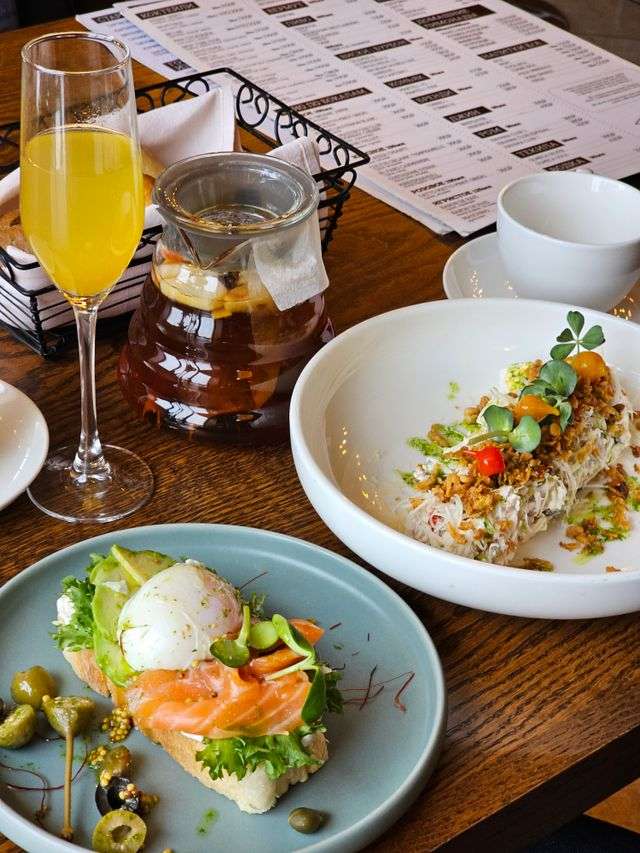
Taking a careful approach to writing descriptions will help your partygoers imagine flavors, taste textures, and anticipate aromas before they order. Food becomes more appealing when people really understand what sets it apart and how the ingredients are working together.
Reference fresh food combinations, highlight cooking techniques, and describe regional influences to create a rich pre-meal culinary journey while allowing the food to speak for itself as much as possible.
Set the Table for Every Guest
With over 2 million people worldwide suffering from food allergies, your vegetarian, vegan, gluten-free, dairy-free, and nut-free options should be clearly recognizable. This will help your guests make informed choices without having to ask important questions, and so without interrupting the event.
Specific dietary needs should be catered to, and these meals should receive equal attention so no one feels like an afterthought. Provide clear labels and concise explanations of each dish so that all your guests feel included and confident about what they will eat.
Too Many Choices Spoil the Broth
Try to limit your menu to a single page because this is the most cost-effective approach that prevents diners’ decision fatigue and creates a more elegant experience. Your guests should be able to see all their options at a glance so they can choose more quickly and decisively.
Give Your Menu a Signature Finish
Paying attention to details can transform a menu from a plain piece of paper to a keepsake that guests will want to hold on to. Make sure your menus take pride of place by integrating them into the wider table setting. A beautifully printed, carefully designed menu card at each setting will add a sense of occasion long before the first course arrives.
Small personalized touches make a big difference, so consider including the event date, the hosts’ names, or a welcome message from the private chef. You can easily adapt a menu template to customize it for your event.
Material choices are important, too. Textured card stock, elegant finishes, and folded menu designs can reinforce the atmosphere you're trying to create.
When you tailor these details to the function, they will help commemorate the event and strengthen the connection to the meal.
The Proof Is in the Pudding, but It’s Important to Set the Tone
A good culinary event starts early on, when your guests start imagining what’s to come. Genuine pleasure comes from anticipating a positive experience, so part of the enjoyment occurs before the event itself.
It’s important to remember this when planning a private dining occasion. Every single element adds to the anticipation, from the invitations you’re sending out and the table setting to the final experience of the venue, the menu, and the food. The menu is positioned at the center of the building's excitement and is the perfect way to whet your guests' appetites.